A concussion can happen in seconds, but its effects can last for days, weeks, or even longer. Whether it happens during sports, PE class, cheerleading, skateboarding, biking, or even a simple fall, concussions are serious brain injuries that should never be ignored.
According to the Centers for Disease Control and Prevention (CDC), a concussion is caused by a bump, blow, or jolt to the head or body that causes the brain to move rapidly inside the skull. While many students associate concussions only with football or contact sports, they can happen to anyone at any time.
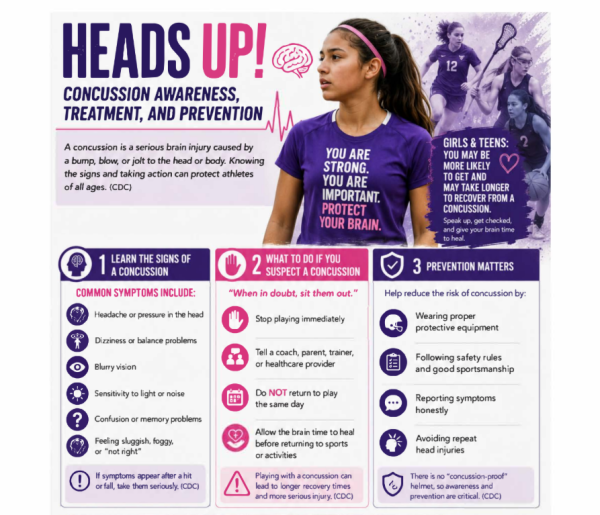
Common Signs and Symptoms
Recognizing the warning signs of a concussion is important because symptoms are not always obvious right away. Some students may feel fine immediately after an injury but begin experiencing symptoms hours later.
Common concussion symptoms include:
- Headache or pressure in the head
- Dizziness or balance problems
- Blurred vision
- Nausea or vomiting
- Sensitivity to light or noise
- Confusion or difficulty concentrating
- Feeling sluggish, tired, or “foggy”
- Memory problems
Students who experience any of these symptoms after a hit, fall, or collision should tell a parent, coach, teacher, athletic trainer, or school nurse immediately.
Why Teens, Especially Girls, Should Pay Attention
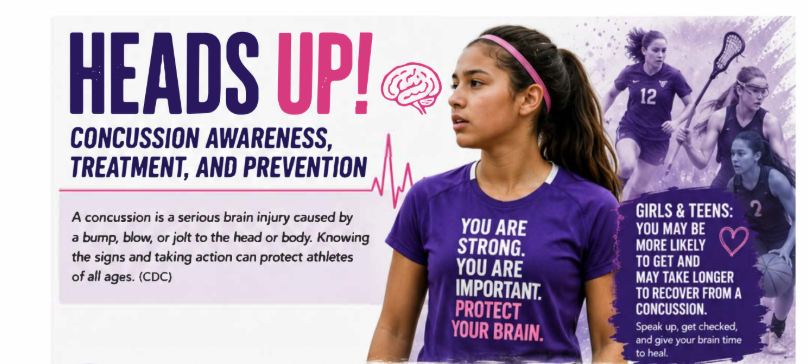
Research shows that adolescent girls may experience concussions differently and sometimes report symptoms that last longer than boys. Because of this, awareness and education are especially important for female athletes and students.
Many teens ignore symptoms because they do not want to miss a game, practice, dance performance, or time with friends. However, continuing physical activity too soon after a concussion can increase the risk of more serious injury and delay recovery.
What To Do If You Suspect a Concussion
If a concussion is suspected:
- Stop playing or participating immediately.
- Tell a trusted adult.
- Seek medical evaluation.
- Rest and follow recovery instructions.
- Return to school, sports, and activities only when cleared by a healthcare professional.
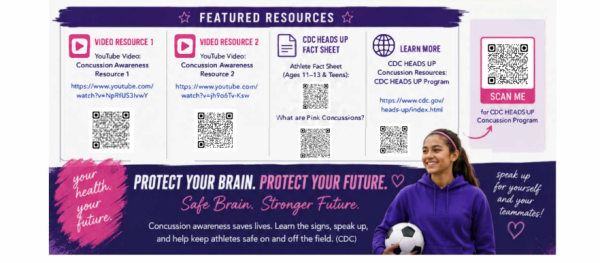
The CDC’s “HEADS UP” program emphasizes the importance of early recognition and proper treatment. Ignoring symptoms or trying to “push through it” can make recovery more difficult.
Prevention Starts with Awareness
While not every concussion can be prevented, students can reduce risk by:
- Wearing properly fitted helmets and protective equipment
- Following safety rules in sports and recreational activities
- Reporting symptoms honestly
- Looking out for teammates and friends
- Practicing safe play and good sportsmanship
Concussion awareness is about protecting more than just sports performance, it is about protecting long-term brain health, learning, memory, and overall well-being.
Protect Your Future
Our brains help us learn, compete, create, and achieve our goals. Taking concussions seriously is one way students can protect their future.
If you think you or a friend may have a concussion, speak up. Reporting symptoms early and getting proper care can make a major difference in recovery.
For more information about concussion awareness, prevention, and recovery, visit the CDC’s HEADS UP program at https://www.cdc.gov/heads-up/.